


Winter Wonderland Eye Woes: Essential Tips for Protecting Your Eyes from Dry Air, Snow Glare, and Wind
The winter months offer dazzling scenery, but they also bring a unique set of challenges for your eye health. The combination of low outdoor humidity, powerful indoor heating, and harsh snow glare creates the perfect storm for discomfort, irritation, and even temporary vision damage.
At Optics&EYECARE, we believe winter eye protection is just as crucial as sunscreen in July. This guide focuses on actionable steps you can take now to prevent winter dry eye and safeguard your sight against the elements, ensuring comfortable vision all season long.
1. Combatting the Indoor Threat: Managing Winter Dry Eye
The most common complaint we hear in winter is the onset or worsening of dry eye symptoms: redness, burning, grittiness, and paradoxically, excessive watering. This is a direct result of the air holding less moisture.
Optimize Your Indoor Environment with Humidifiers
The most powerful weapon against indoor dryness is a humidifier. Indoor heating systems drastically strip moisture from the air, causing your natural tears to evaporate faster than your eyes can produce them.
Placement is Key: Place a cool-mist humidifier in your bedroom and near your primary workspace (such as a home office). Running it overnight can significantly reduce morning dry eye discomfort.
Avoid Direct Heat: Never sit directly in the path of car heating vents, portable heaters, or fireplaces. Direct airflow rapidly dehydrates the eyes. Adjust vents to point toward the floor or away from your face.
2. Protecting Against the Glare: Snow Sports and UV
Sunlight in winter is often more damaging than in summer. Fresh snow can reflect up to 80% of UV radiation, hitting your eyes twice: once from above and once from the reflective ground. Failure to use proper protection can lead to photokeratitis (a painful corneal sunburn, also known as snow blindness).
Choosing the Right Sunglasses and Goggles for Snow Glare
When engaging in snow sports or even spending time outdoors shoveling snow, your protective eyewear needs specific features:
100% UV Protection (Non-Negotiable): Always ensure your sunglasses for snow or goggles block 99-100% of UVA and UVB rays.
Wraparound Style: This is essential to block wind, stray UV light that sneaks around the frame, and cold air from irritating your eyes.
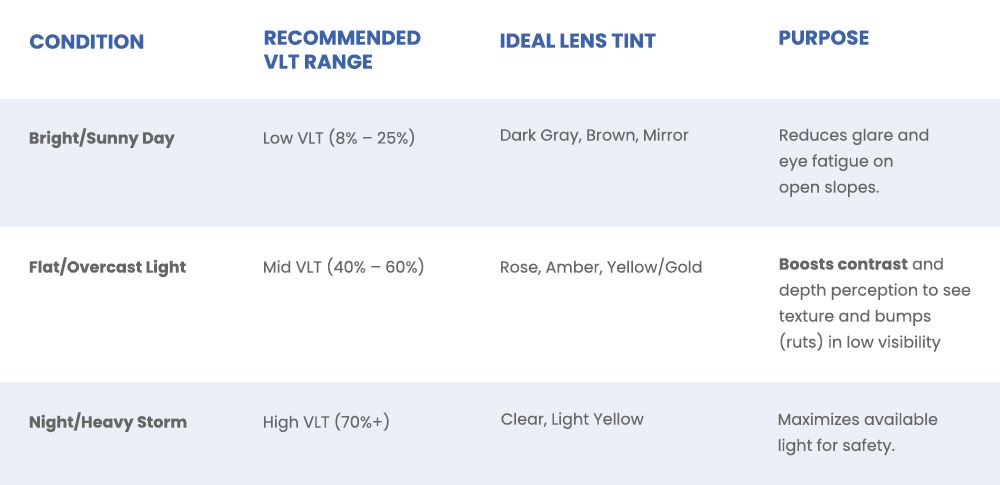
VLT and Lens Tint: Visible Light Transmission (VLT) indicates how much light the lens lets through. Selecting the right VLT is crucial for safe navigation:
3. Your Winter Eye Care Kit: Drops and Routine
Maintaining the quality of your tear film—the delicate layer of oils, water, and mucus that protects your eye—requires a daily routine.
Use Artificial Tears: Use lubricating artificial tears regularly, especially before heading outside or after prolonged screen time. Choose preservative-free drops if you use them more than four times a day. Crucially, avoid drops that promise to "get the red out," as these can actually worsen dry eye symptoms over time.
Warm Compresses: If your dry eye is linked to poor tear quality (Meibomian Gland Dysfunction), applying a warm compress (a clean washcloth soaked in warm water) for 5–10 minutes daily can help unclog the oil glands in your eyelids, stabilizing the tear film and preventing rapid evaporation.
The 20-20-20 Rule: Increased screen time in winter leads to reduced blinking. Follow the 20-20-20 rule: Every 20 minutes, look at something 20 feet away for 20 seconds. Make a conscious effort to blink fully and frequently.
4. Frequently Asked Questions (FAQ)
Q: Does cold wind cause dry eye, or is it the dry air?
A: It’s a combination of both. Cold air holds less moisture (low humidity), and wind speeds up the evaporation of the tear film, stripping the protective moisture layer from your eyes even faster. Wearing proper eye protection (wraparound glasses or goggles) is vital to create a micro-environment that shields your eyes from the wind.
Q: Do I need polarized lenses for the snow?
A: Polarized lenses are highly effective at cutting glare from horizontal surfaces like flat snow and ice, reducing eye strain. For casual winter eye protection, polarization is excellent. However, some advanced snow sports athletes prefer non-polarized lenses because polarization can sometimes mask the glare that distinguishes a slippery patch of ice from packed snow. For general use, they are recommended.
Q: Can my winter dry eyes lead to permanent damage?
A: While mild winter dry eye is common and temporary, chronic, severe dryness left untreated can potentially lead to inflammation, corneal abrasions, and increased risk of eye infections. If home remedies like a humidifier and artificial tears don't provide relief, you should consult your eye doctor for advanced treatments.
Q: Why do my eyes water so much in the cold?
A: This is a classic sign of dry eye! When your eye surface becomes too dry due to rapid evaporation, it sends an emergency signal to your brain. The eye then produces a flood of thin, watery tears (reflex tearing) that lack the necessary oils to stay on the eye, causing them to run down your cheek. Proper dry eye treatment addresses the underlying quality of the tears to stop the watering.
Protecting your eyes in winter is an active process. By controlling the air in your home and selecting the right gear for the outdoors, you can enjoy the beauty of the season without the misery of discomfort.
If you are struggling with severe dryness or discomfort, schedule an appointment with your Dr. Seema Mohanan at Optics&EYECARE to discuss custom dry eye treatment plans.

All Eye
Care Services

Keep
In Touch
MAP
Powered by: 