


👓 Beyond the Standard Lens: A Primer on High-Index, Polycarbonate, and Advanced Coatings
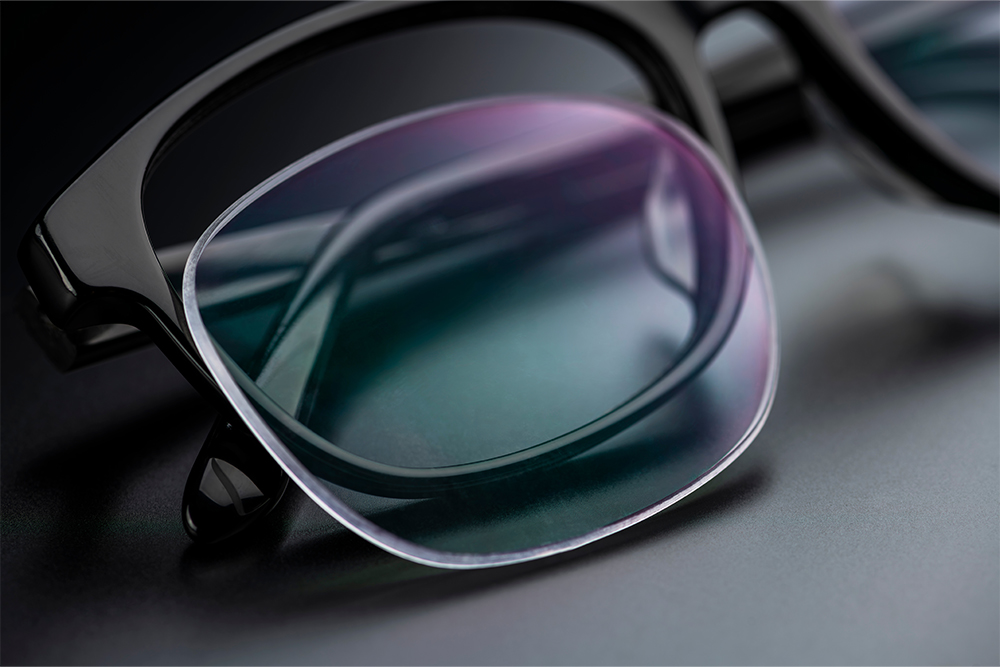
When you choose a new pair of glasses, it’s easy to get caught up in the style of the frames. However, the lens material and specialty coatings you select determine how heavy your glasses feel, how clearly you see, and how well your eyes are protected from digital strain.
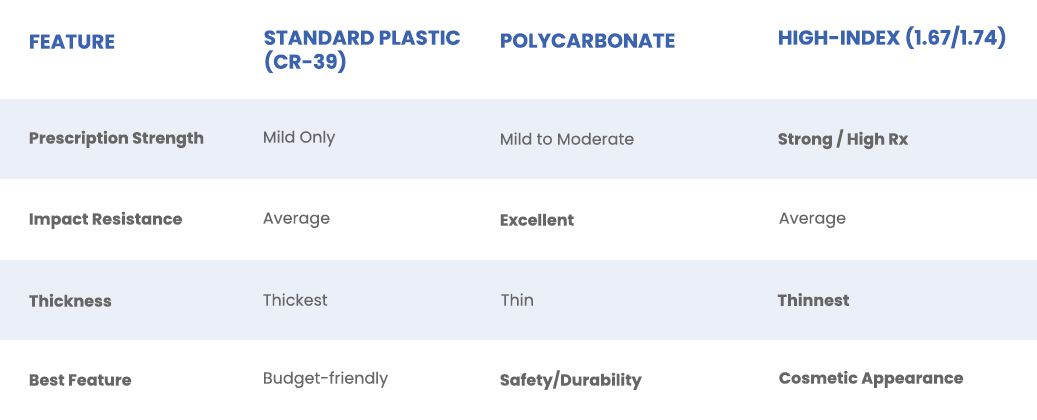
Standard plastic (CR-39) has been the industry workhorse for decades, but it isn't always the best fit for modern lifestyles or stronger prescriptions. Today, we’re diving into the essential lens options and coatings to help you find your perfect match.
1. Polycarbonate: The Durable All-Rounder
Originally developed for aerospace windshields and riot gear, polycarbonate lenses are the "gold standard" for safety and active lifestyles.
Best For: Children, athletes, and safety eyewear.
The Profile: They are roughly 30% thinner and lighter than standard plastic.
Key Benefit: Exceptional impact resistance. They are virtually shatterproof, making them the safest choice for active kids, sports, or hazardous work environments.
UV Protection: Polycarbonate naturally blocks 100% of the sun's harmful UV rays without needing extra treatment.
2. High-Index: The "Coke Bottle" Cure
For those with strong prescriptions (+/- 3.00 and above), High-Index lenses are a game-changer for both comfort and aesthetics.
Best For: Strong prescriptions for nearsightedness, farsightedness, or astigmatism.
The Profile: High-index materials (ranging from 1.60 to 1.74) bend light more efficiently, allowing the lens to be significantly thinner and flatter.
Key Benefit: High-index lenses eliminate the bulky edge thickness of strong nearsighted prescriptions and the magnifying "bulge" of farsighted ones, ensuring your eyes look natural behind the glass.
✨ Essential Lens Enhancements
The material is only half the story. To get the most out of your eyewear, we recommend these essential enhancements:
Anti-Reflective (AR) / Reflective Coatings
Standard lenses reflect about 8-12% of light, which can cause distracting "ghost images" and glare.
Why You Need It: AR coatings allow 99% of light to pass through the lens. This results in sharper vision, especially during night driving, and allows others to see your eyes clearly rather than seeing a reflection of the room in your glasses.
Mandatory for High-Index: Because high-index materials are denser, they are naturally more reflective. An AR coating is considered a necessity for these lenses to maintain visual clarity.
Blue Light Filtering
In our digital-first world, we are exposed to more "High-Energy Visible" (HEV) blue light than ever before from smartphones, tablets, and LED lighting.
Why You Need It: Blue light filters help reduce Digital Eye Strain, which often manifests as dry eyes, headaches, and blurred vision after long hours at a computer.
The Sleep Connection: Exposure to blue light in the evening can suppress melatonin production. Filtering this light can help maintain your natural sleep cycle.
❓ Frequently Asked Questions (FAQ)
Q: Why do my high-index lenses need an anti-reflective coating?
A: High-index materials are denser, which naturally causes them to reflect more light than standard lenses. Without an anti-reflective coating, you would experience significant glare and others wouldn't be able to see your eyes clearly through the lenses.
Q: Does blue light coating change the color of what I see?
A: Most modern blue light filters are nearly clear. You may notice a very subtle yellow or "warm" tint, or a slight blue reflection on the front of the lens, but most users find their eyes feel much more relaxed during screen use.
Q: At what prescription strength should I switch to High-Index?
A: Generally, if your prescription is +/- 3.00 or higher, you will start to see a significant benefit in weight and thickness by moving to a 1.67 high-index lens. For very high prescriptions (+/- 6.00 or higher), 1.74 is the thinnest option available.
Q: Is polycarbonate safe for my child?
A: Yes, it is the most recommended material for children. Because kids are active and often prone to accidents, the shatterproof nature of polycarbonate provides the best protection for their eyes.
Ready for an Upgrade?
Choosing the right material and coating ensures your glasses don't just help you see—they help you feel confident and comfortable. Whether you need safety-rated protection or the thinnest profile possible for a high prescription, our team at Optics&EYECARE is here to guide you.
Schedule your lens consultation today at opticsandeyecare.com!

All Eye
Care Services

Keep
In Touch
MAP
Powered by: 